
1,931 search results for “lion ter presentation” in the Public website
-
Essential protein for metastasis identified
An essential protein that regulates our heart beat turns out to be important for cancer cells as well. The discovery might open novel treatment strategies for fighting metastasis. Publication in Science Signaling on April 4th.
-
Human DNA softer than DNA single-celled life
Single-celled organisms have stiffer DNA than multicellular lifeforms like humans and rice. Theoretical physicists managed to simulate the folding in full genomes for the first time to reach this conclusion. Publication in Biophysical Journal on February 7.
-
NWA funding for communications research on quantum computing
Leiden physicist Julia Cramer receives 50 thousand euros in funding for 'Let's talk about quantum', a research project on communication about quantum computing. A project for high school students by education expert Henk Buisman is also included in the NEWA ELSA funding.
-
Mechanism MRI amplifying agents explored
Special amplifying agents can make MRI scanners and NMR techniques hundreds of times more sensitive. Leiden physicists have now found a method to test their efficiency. More sensitive MRI scans could for example improve our understanding of cystic fibrosis or Parkinson’s disease. Publication in PCCP…
-
Surprising similarity between stripy black holes and high-temperature superconductors
We don’t understand how some materials become superconducting at relatively high temperatures. Leiden physicists have now found a surprising connection with auxiliary black holes. It enables us to use our knowledge of black holes on the mystery of high-temperature superconductivity. Publication in Nature…
-
Dutch Theoretical Physics reviewed as excellent
The Dutch Research School for Theoretical Physics (DRSTP) has received excellent ratings from an independent international committee. The DRSTP is a school for PhD training which has grown out of a collaboration between the theoretical physics departments at six Dutch universities—including Leiden—and…
-
Andrew Webb receives 2017 Simon Stevin Master Prize
Andrew Webb, Professor of MRI Physics at LUMC and teacher at the Physics education at Leiden University, has been awarded the 2017 NWO Simon Stevin Master Prize. The prize includes a cash award of 500,000 euros. Webb is planning to use the prize to develop new MRI techniques that allow diseases to be…
-
New theory on liquid crystals with high symmetry
LCD screens use liquid crystals which have a high degree of order, even though they form a fluid. A new theory maps out the interplay between order, temperature and symmetry. Publication in Physical Review X.
-
New memory developed for superconducting computer
If computers work on superconducting current, they won’t consume any energy. Leiden physicists have now gained control over a new type of superconducting memory elements. Publication in Nature Communications.
-
Cross-talk between stagnation points in flow and orientation
Publication in Proceedings of the National Academy of Sciences.
-
Jointly into the quantum future
The second quantum revolution is in full swing, bringing all kinds of new technologies to within reach, and offering many opportunities as well as challenges. Leiden and Delft decided to join forces.
-
Knighthood for Professor Henk Schulte Nordholt
Professor Henk Schulte Nordholt was made a Knight of the Order of the Netherlands Lion on Friday 6 September 2019 for his services to the study of Indonesia. Mayor of Leiden, Henri Lenferink, presented him with his medal. This was at the end of a valedictory symposium for and a valedictory speech by…
-
Upper Limit Found for Quantum World
The small quantum world and our world of perception obey different laws of nature. Leiden physicists search for the border between both worlds. In an article published soon in Physical Review Letters they set an upper limit.
-
The search for a ‘quantum advantage’
Proving a quantum computer to be quicker than a normal one is one step closer. After a breakthrough in speeding up classical algorithms, researchers Vedran Dunjko and Casper Gyurik showed that only one quantum algorithm could beat its classical counterpart. They discuss their discovery in Quanta Mag…
-
A new step in the search for the origin of dark matter
A signal that is present both in the centre of our Milky Way and in distant places in the universe could reveal the origin of dark matter. This is what Leiden physicist Alexey Boyarsky concludes in an article in Physical Review Letters.
-
Rubicon for ‘Artificial Sun’
Physicist Christopher Berg Smiet, who recently obtained his PhD in Leiden, has been awarded an NWO Rubicon. The grant allows him to conduct postdoctoral research for two years at the Princeton Plasma Physics Laboratory (PPPL) in the United States.
-
Prize for school research project on butterfly wings
Why are morpho butterflies blue? That is what high school students Frederique Kerstens and Koen van Griensven investigated in their high school profile paper at the Leiden Institute for Research in Physics. In doing so, they won the KHMW Profielwerkstukprijs 2023. ‘We didn't expect it, but are of course…
-
New flowchart to eliminate Universe models
Cosmologists have many possible models for the Universe, of which only one can be true. A new flowchart will eliminate some of them when two specific Universe features are accurately measured. Publication in Physical Review D on 7 November.
-
Leiden physicists meet Nobel prize winners
Two Leiden physicists took part in the Lindau conference in Germany from 26 June to 1 July. They met Nobel prize winners from their field.
-
Heineken Young Scientists Award for three Leiden researchers
Three of the four Heineken Young Scientists Awards for 2022 have gone to researchers from Leiden: chronobiologist Laura Kervezee, physicist Jordi Tura i Brugués and health psychologist Liesbeth van Vliet.
-
Bachelor's research on ultra-thin nanochip nominated for Young Talent Award
Using 2D materials, physics student Romme van der Kemp developed a nanochip that is extremely small ánd scalable. This is needed to make all kinds of technologies better, faster and smaller. He has been nominated for the FWN Young Talent Award 2023 for his research.
-
Century-old law on electric noise overturned
Electric noise can be useful for scientists but inconvenient for chip manufacturers. They do share a wish to predict the amount of noise. PhD student Sumit Tewari overturns a century-old law relating noise to current. He defends his thesis on March 27th.
-
Ten Leiden students receive prize for outstanding achievement
Ten Leiden students have received a prize from the Royal Holland Society of Sciences and Humanities (KHMW). They were nominated by their degree programme. Who are these students?
-
Two ERC Consolidator Grants for Leiden researchers
Research on quantum computers and Islamic charities: two Leiden researchers have received a Consolidator Grant from the European Research Council.
-
Electrons give resist layer electrical charge
Leiden physicists found a surprising interaction between electrons and a resist layer. The resist appears to charge and discharge due to incoming electrons. Publication in Physical Review Letters.
-
New quantum computer design to predict molecule properties
The standard approach to build a quantum computer with Majoranas as building blocks is to convert them into qubits. However, a promising application of quantum computing—quantum chemistry—would require these qubits to be converted again into so-called fermions. Physicists from Leiden and Delft suggest…
-
Insulating phenomenon in superconductor
Leiden physicist Milan Allan and his group have discovered an apparent paradox within a material that has zero electrical resistance. They measured trapped charges, while charges should in theory keep flowing in the absence of resistance. The discovery could provide a missing piece of one of the big…
-
New practice tool for quantum computer coding: OpenFermion
In a global effort, quantum computers are rapidly being developed. In the meantime, researchers have to learn how to write code for these devices, which are fundamentally different from conventional computers. A collaboration of scientists led by Google, and including physicists from Leiden and Delft,…
-
Researchers from Leiden University have received awards in Nationaal Groeifonds Quantum Technology programme
Three researchers from Leiden University have received awards in the Quantum Technology programme within the National Growth Fund, organised by NWO in collaboration with Quantum Delta NL. Read more about these three futuristic projects.
-
Opening Event Three New Leiden Wall Formulas
The inner city of Leiden has gained three new wall formulas. On Wednesday 22 November at 15:30 in the Klein Auditorium, alderman Robert Strijk will reveal the paintings of Lorentz contraction, Oort constants and electron spin.
-
Leiden has highest percentage female first year students Physics & Astronomy
The bachelor education programmes of Physics and Astronomy in Leiden combined have the highest percentage female first year students in The Netherlands, according to numbers published by the Dutch Journal of Physics.
-
NWO Open Competition grants for two projects with Leiden researchers
Two research projects with researchers from Leiden University have been awarded a Dutch Research Council (NWO) Open Competition Domain Science-M programme grant. These grants fund curiosity-driven, fundamental research in the Science domain.
-
NWO and Groeifonds funding for research into smart light-responsive chips
Physicists at Leiden University are developing smart chips that can be programmed with light. These chips are more energy-efficient than traditional chips because they do not require a constant power supply. For this research, they will receive funding in the coming years from the Dutch Research Council…
-
Making the impossible work: from idea to invention
150 years of the Fine Mechanical and Electronics Department—a milestone our instrument makers and electronics engineers can truly be proud of. For a century and a half, they have crafted unique research instruments for the Faculty of Science, making an indispensable contribution to its experimental…
-
 Vedran Dunjko
 -
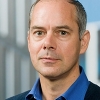 Dirk Bouwmeester
 -
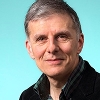 Carlo Beenakker
 -
Ancient History Research Seminar, Student Presentations
Lecture, Ancient History Research Seminar
-
In the Media
Our research regularly receives attention in the (Dutch) popular media. Here is an overview.
-
Hoven in Holland, 900-1300
In welke mate hebben domaniale structuren de machtsvorming en nederzettingsontwikkeling in en van het gewest Holland bepaald?
-
The UN and I: What can the UN mean for My Future?
What is the first thing you think of when you hear the word UN? Is it just the Security Council and the ‘blue helmets’ or is there more to it? These are some of the questions tackled by the Chair’s research group.
-
Jorrit Rijpma presents at a Workshop in Florence on the occassion of the 25th jubilee of the Area of Freedom, Security and Justice
On 23 and 24 November scholars working on European Justice and Home Affairs, united at the European University Institute in Florence on the occassion of the 25th year jubilee of the Area of Freedom, Security and Justice. The EU policy area covering migration, asylum and criminal justice cooperation.
-
Book presentation: 'Stop the Machines: The Rise of Anti-Technology Extremism'
Book presentation
- Living in a wetland landscape: the late Neolithic Vlaardingen culture revisited
-
Why biology students and teachers value the E-learning skills platform
Students of the Biology minor course Molecular Design have successfully boosted their skills in collaboration, research and writing with the recently developed E-learning Skills Platform. The biology students and their teachers greatly value the initiative. ‘Sometimes I couldn’t believe what progress…
-
In Memoriam Erik Deul 1958 – 2026
On March 13, Dr. Erik Deul passed away at the age of 67. He leaves behind his wife Wilma, children Caroline and Wouter, and grandchildren Joris, Stach, Viggo, Archie and and a granddaughter expected later this year. Erik served as head of ICT at Leiden Observatory for 35 years, and later also at the…
-
LUCAS on a trip to NIMAR in Morocco
It was more than two years in the making, but despite the delays, giving up was not an option. In May, eighteen staff members of LUCAS and the Faculty of Archaeology visited NIMAR.
-
University introduces lay talk and it looks like this
Complex research with a generous sprinkling of jargon: PhD defences can be difficult for non-experts to follow. In the compulsory new lay talk, PhD candidates begin by explaining their dissertation in words of one syllable. And it’s not just the PhD’s family and friends who appreciate this.
-
Ambassadors visit Leiden: ‘Knowledge knows no borders’
Over 30 ambassadors strengthened their ties with researchers and university leaders in a recent visit to Leiden University. Cross-border collaboration (both literal and figurative) was the theme of presentations and a tour of the Hortus botanicus.
-
Jouke Tegelaar wins faculty Jongbloed thesis prize 2015-2016
The thesis “Exit Peter Paul? Divergente toezichthoudersaansprakelijkheid in de Europese Unie voor falend financieel toezicht, bezien vanuit het Europeesrechtelijke beginsel van effectieve rechtsbescherming” (Exit Peter Paul? Divergent supervisory liability in the European Union for failing financial…