
1,395 search results for “seconden world war” in the Public website
-
Across world orders: information, trust, control, and those in-between in the Qing-Tibetan relationship (1636-1727)
On Friday 16 May Juul Eijk successfully defended a doctoral thesis and graduated.
-
Marhold and Voermans discuss legal aspects of a European war economy
On 4 April 2024, a meeting of the standing committee of the Dutch House of Representatives was held. At this meeting, Anna Marhold, Assistant Professor at the Grotius Centre and Wim Voermans, Professor of Constitutional Law, informed the committee about the economic and legal implications of a military…
-
 Jan van Dijkhuizen
Faculty of Humanities
-
The Representation of Imperial Rule and the Classical World in Early Medieval England
In early medieval England, there was an interest in the history of the Roman Empire and kings adopted such imperial titles as 'imperator' or 'basileus'. How can we explain this interest and what functions did imperial ideas and the reception of the classical world serve in early medieval England?
-
Historian Katja Happe new Cleveringa Professor
German historian Katja Happe is the new Cleveringa Professor at Leiden University. She will give the Cleveringa Lecture on 26 November 2019. She conducts research into the persecution of the Jews in the Netherlands, and wrote the critically acclaimed book 'Veel valse hoop' (Much False Hope).
-
International Coalitions for Peace in the Era of Decolonization, 1918-1970
International Coalitions for Peace in the Era of Decolonization, 1918-1970
-
Traitors, profiteers or collaborators: ‘The Jewish Council has long been judged too harshly’
For too long the Dutch collective memory has judged the Jewish Council too harshly. This perspective needs to be adjusted, Bart van der Boom argues in his new book ‘De politiek van het kleinste kwaad’ (lit. ‘The Politics of the Lesser Evil’).
-
a livelihood perspective of economic development in the post-Roman world.
Today’s socio-economic challenges aren’t new. In the centuries after the retreat of the Roman state people with different backgrounds and with different ways of life somehow managed to build and maintain a complex economic system in northern Gaul that would produce the ruling dynasties of Europe. By…
-
Creating a New Context for Understanding the Emergence of the First World Empire
The Persian Empire (539-330 BCE) was the first world empire in history. At its height, it united a territory stretching from present-day India to Libya - and it would take 2,000 years before significantly larger empires emerged in early modern Eurasia. This territorial sweep is both a source of fascination…
-
learn from drama and the arts: scripts, stages, and performances in world politics
LUCIR presentation and discussion
-
Rules for a lawless world? Exploring the tension between the ‘rules-based international order’ and international law
The project explores the impact of the clash between defenders of a rules-based order and international law on global governance and the future of legal systems.
-
The Legitimacy and Effectiveness of Law & Governance in a World of Multilevel Jurisdictions
Is the legitimacy of law and governance of multilevel jurisdictions diminishing? What is the significance of (diminishing) legitimacy for the effectiveness of law? These kinds of questions about the legitimacy of the supranational formation of law, its application, and the policy and governance based…
-
Intergenerational resilience and anticipation of conflict and natural disaster
How do descendants of survivors of violent conflict anticipate and respond to potential, future disaster – both potential new conflict and natural hazards?
-
Trump's trade war introducing unilateral trade tariffs violates treaty
Terminating the Trade Treaty between the US, Mexico and Canada, as Trump intends, violates the treaty and also has implications for labour law, says emeritus professor of international labour law, Paul van der Heijden, in Dutch newspaper ‘Het Financieele Dagblad’.
-
 Karin de Wild
Faculty of Humanities
-
 Lettie Dorst
Faculty of Humanities
-
 Carolien Stolte
Faculty of Humanities
-
Florian Schneider
Faculty of Humanities
-
A Companion to Cities in the Greco-Roman World
This collection of essays explores processes of innovation in Greco-Roman technology and science.
-
La Cetra Cornuta : the Horned Lyre of the Christian World
What was the stringed instrument known in medieval and early Renaissance Italy as “cetra”?
-
Exploring strange new worlds with high-dispersion spectroscopy
Until the 1990s, the only known planets were those in our Solar System. Three decades later, several thousand exoplanets have been discovered orbiting stars other than the Sun, and substantial efforts have been made to explore these strange new worlds through spectroscopic analyses of their atmosphe…
-
Solving problems in your head and in the world
Until recently, the role of external information processing in intelligence has rarely been investigated quantitatively or experimentally. A group of researchers from Erasmus University Rotterdam, Leiden University, GGZ Rivierduinen, and University of Edinburgh measured in a new way how and when people…
-
‘For good measure’: data gaps in a big data world
Sarah Giest and Annemarie Samuels, both Assistant Professors at Leiden University, researched the quality and coverage of the data being collected for policiymakers to be used, specifically pertaining to minority groups.
-
Dutkiewicz, Casier & Scholte (eds.), Hegemony and World Order
Does hegemony—legitimated rule by dominant power—have a role in ordering world politics of the twenty-first century? If so, what form does that hegemony take: does it lie with a leading state or with some other force? How does contemporary world hegemony operate: what tools does it use and what outcomes…
-
Trading Responsibility: navigating national burdens in a globalized world
International trade has played a major role in defining the modern global economy. Trade, however, entangles the environmental pressures of economic sectors, giving the illusion of environmental improvements, while the opposite may be occurring.
-
La Cetra Cornuta : the Horned Lyre of the Christian World
What was the stringed instrument known in medieval and early Renaissance Italy as “cetra”?
-
Inter-Section: How Materials Shaped the Human World
The Faculty of Archaeology's own home-grown journal Inter-Section has released a new volume. Inter-Section offers students and PhD candidates the unique chance to publish in a peer-reviewed journal. The new volume focuses on the materials that shape our world.
-
 Juan Masullo Jimenez
Faculty of Social and Behavioural Sciences
-
‘Don’t assume that someone else will step in’
Her book ‘Veel valse hoop’ (Much False Hope) about the persecution of the Jews in the Netherlands was immediately hailed as a seminal work. German historian Katja Happe gave the Cleveringa Lecture on 26 November. She is fascinated by what makes people take a stand.
-
improvisation: drawing meaningful connections between self, others and world.
The starting point of Hermans' research is how both children's physical play and dance improvisation by professionals can be considered somatic practices where sense-making manifests itself in and between bodies, and through movement.
-
Indonesian resistance hero and Leiden student Irawan Soejono is given a face
To mark its 75th anniversary, the Netherlands War Graves Foundation is publishing a portrait of a war victim every week this year. On 24 January the drawing of Irawan Soejono, a Leiden student and Indonesian resistance member, was unveiled at the Groenesteeg cemetery in Leiden, the place where Soejono…
-
 Matthijs Westera
Faculty of Humanities
-
Call for papers 'Whose Welfare? Fresh Perspectives on the Post-war Welfare State and its Global Entanglements'
Recently, the so-called refugee crisis has been framed as a threat for well-developed welfare states in Europe by the president of the Eurogroup, Jeroen Dijsselbloem. According to him, external borders have to be guarded, because otherwise ‘loads of people will come to demand support and they blow up…
-
 Malte Riemann
Faculty of Governance and Global Affairs
-
From Conflict Termination to Peacemaking: Role and Contours of a Contemporary Jus Post Bellum (or The Jus Post Bellum Project)
Should the law and norms applicable to armed conflict include a distinct category covering the transition from armed conflict to peace, jus post bellum, and if so what are its characteristics?
-
 Chelsie Yount-André
Faculty of Governance and Global Affairs
-
 Marie Robin
Faculty of Governance and Global Affairs
-
 Annelies Schulte Nordholt
Faculty of Humanities
-
Cleveringa Professor: Holocaust remembrance has led to very different political lessons
From memorials to the armed forces to memory stones for individual victims. It was only later that the Holocaust took a central role in Western remembrance culture, Cleveringa Professor Frank van Vree notes. ‘Nationalists and human rights activists both invoke the experience of the Holocaust.’
-
Improvisation: Drawing Meaningful Connections Between Self, Others and World
The starting point of Hermans' research is how both children's physical play and dance improvisation by professionals can be considered somatic practices where sense-making manifests itself in and between bodies, and through movement.
-
 Gjovalin Macaj
Faculty of Governance and Global Affairs
-
Leiden Law School rises in QS World University Ranking
Leiden Law School has moved up three places in the global ranking of law faculties and is now in 21st place.
-
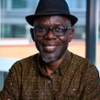 Walter Nkwi Gam
Faculty of Humanities
-
 Carmen van den Bergh
Faculty of Humanities
-
 Jan Sleutels
Faculty of Humanities
-
 Alexandra Prégent
Faculty of Humanities
-
 Aron van de Pol
Faculty of Humanities
-
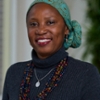 Nancy Kula
Faculty of Humanities
-
Cleveringa Professor: ‘Individuals make history’
Through each individual decision, however small, people make history. This is what historian Katja Happe said in the Cleveringa Lecture on 26 November. She illustrated this with individual reactions to the persecution of Jews during the Second World War.
-
 Joanne Stolk
Faculty of Humanities