
1,024 search results for “reading like” in the Public website
-
Unraveling the role of signaling networks controlled by Grainyhead like transcription factor in breast cancer subtypes
This project is funded by the Dutch Cancer Society. The project will be part of an ongoing research line aimed at identifying mechanisms of cancer therapy resistance and metastasis. In this project, it will be investigated how the Grainyhead family of transcription factors controls therapy response…
-
The Function of Toll-like receptor 2 in Infection and Inflammation
The function of TLRs in innate immunity has aroused worldwide attention soon after its discovery. Because of the broad functions of TLR2 in innate immunity, the drive for the development of TLR2-targeted vaccines or therapeutic treatments has accelerated in the last decades.
-
‘Nature likes a mess’
Wouter Moerland is on a two-year secondment as ecology adviser at the Municipality of Leiden. This biology alumnus talks animatedly about his work. ‘We’re working hard to increase nature’s chances in town.’
-
Young babies laugh like apes
Young babies laugh like adult apes do: producing sounds while inhaling and exhaling. Adult humans produce sounds on the exhale only. Cognitive psychologist Mariska Kret and colleagues have published an article about the development of human laughter in the journal Biology Letters.
-
‘Let pupils actively engage with texts to improve their reading comprehension’
Young Dutch people’s reading skills have been declining for years. The main reason for this is that many have difficulty with reading at greater depth. Teach pupils to read actively in order to construct meaning is what Leiden researchers Paul van den Broek, Christine Espin and Anne Helder write in…
-
Adriaan van der Weel about E-READ in the Frankfurter Allgemeine Zeitung
Researchers from more than 30 countries have been discussing the changes in reading through digitization in the European research network E-READ. Adriaan van der Weel, Senior University Lecturer, spoke about the network’s achievements in the German newspaper Frankfurter Allgemeine Zeitung.
-
Consolidator Grant for Marijn van Putten: How many ways are there to read the Quran?
How should the Quran be read? The manuscript of this holy book makes different interpretations possible. Researcher Marijn van Putten has been awarded an ERC Consolidator Grant of two million euros to explore centuries-old recitations.
-
The most read stories of 2021 from Leiden University
Research into depression in children, Leiden alumni in the Dutch House of Representatives and an exceptional achievement by one of our students: what do this topics have in common? They are among our most read stories of 2021.
-
Electrons found to flow like water
Science Magazine has published three back-to-back papers on an important discovery in solid state physics. Leiden physicist Jan Zaanen wrote a Perspective article on the subject in the same issue of 4 March.
-
Andy Sorensen's Scientific Reports article in top 100 most read
The research article ‘Neanderthal fire-making technology inferred from microwear analysis’ received 7,053 article views in 2018, placing it as one of the top 100 read Scientific Reports articles in that year.
-
Conference: Vernacular Books and Reading Experiences in the Early Age of Print
This conference explores how reading experiences were shaped both by producers and users of vernacular books. By adopting an international and interdisciplinary perspective (combining book history, literary history, art history, religious studies, and history of knowledge) it aims to contribute to the…
-
Stereotypes and Misconceptions about the Middle East - The Reading List
The perception of the Middle East is riddled with stereotypes that have had dire consequences on its people. What is myth and what is reality? How did these stereotypes come about? What consequences have they had? All of these questions and more are answered within this reading list.
-
Studying abroad - what's it really like?
What's it like studying abroad? Noor Ismail and Charlot Oltmans share their experiences in videos made in Hhangzhou and Oslo.
-
The ancient Egyptians were just like us
The people who lived in Saqqara, City of the Dead in Egypt, died thousands of years ago, but they are not all that different from us. This is what a study by the National Museum of Antiquities in Leiden, The Netherlands concludes. If you wanted to prove that you had good taste in ancient Egypt then…
-
Storytelling
Het CPL biedt opleidingen voor hogeropgeleide professionals: starters, ervaren professionals en leidinggevenden.
-
Why arteriosclerosis looks like an autoimmune disease
Arteriosclerosis bears great similarities to autoimmune diseases. Researchers from Leiden University show this in a new study they published in the renowned scientific journal Nature Cardiovascular Research. 'This discovery suggests that treatment methods for autoimmune diseases might also be effective…
-
Why do we like winners so much?
Hardly anyone in the Netherlands ever watches skeleton racing. But we’ll soon be glued to our TV sets when ‘our’ Kimberley Bos slides down the track at the Olympic Games. All because she stands a good chance of winning a medal. Why do we like winners so much?
-
Artificial microswimmers work together like bacteria
Microscopic swimmers such as bacteria do not always swim alone. There are advantages to exchanging information and cooperating. Stefania Ketzetzi and colleagues now show in Nature Communications that human-made microswimmers, too, can cooperate.
-
Modern Literature from the Middle East - The Reading List
The Middle East has a rich literary tradition, which is steadily gaining a foothold in the West. Modern literary works deal with contemporary issues, such as the legacy of colonialism, the struggles between traditionalism and modernity, the place of women in society and the war in Israel/Palestine.
-
Why you (won’t) vote – A reading list
In November, the Dutch will elect a new parliament. Not all eligible citizens will go out and vote, however. How can this be explained, and how big of a problem is it? International research into voter turnout can shed new light on this issue – and offer possible solutions.
-
Self adjuvanting immunopeptides: Design and synthesis
Chapter 2 describes a post-synthetic methodology to introduce a fluorescent label in highly lipophilic, Pam3Cys based conjugates.
-
Digging for treasure in archives: what did spoken Scots sound like?
How did Scottish speakers sound hundreds of years ago? University lecturer Mo Gordon thinks the answer to that question can be found in church archives. 'It can be a boost to your identity to know the history of your language.'
-
Like dust on the Silk Road: an investigation of the earliest Iranian loanwords and of possible BMAC borrowings in Tocharian
On the 20th of April, Chams Benoît Bernard successfully defended a doctoral thesis. The Leiden University Centre for Linguistics congratulates Chams on this achievement!
-
Leiden students help children from The Hague: 'Now I can read and understand what I've read.'
There is an enormous disparity between children from low and high socio-economic backgrounds. In the Leiden Tutor Programme Leiden students and scientists are exploring what they can do to close that gap. And at the same time the children are learning a lot through the programme.
-
Being an Indonesian PhD in Leiden: what is that like?
Wija Wijayanto and Arum Perwitasari both were Indonesian PhD students at Leiden University, funded by the Leiden-DIKTI Graduate Scholarship Programme. With the help of this scholarship, literally thousands of students travel abroad to write their dissertations. During their research period, Arum and…
-
Open Day for international students: ‘I like the Leiden canals’
On Saturday 13 October the historical city Leiden was crowded with prospective students visiting the Open Day. They all came to Leiden to orientate themselves towards studying at Leiden University or to ask questions about the content of the bachelor’s programmes. Among them were a lot of international…
-
‘One day of lessons and the Boa people can read their own language’
Until recently the Congo’s isolated Boa community had never read a single letter in their own language: quite simply, there was no alphabet to describe the language. A crowdfunding campaign by guest staff member Gerrit de Wit has changed that. He plans to use the rest of the money to work with a Congolese…
-
Being an Indonesian PhD in Leiden: what is that like?
Wija Wijayanto and Arum Perwitasari both were Indonesian PhD students at Leiden University, funded by the Leiden-DIKTI Graduate Scholarship Programme. With the help of this scholarship, literally thousands of students travel abroad to write their dissertations. During their research period, Arum and…
-
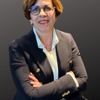 Marga Sikkema-de Jong
Social & Behavioural Sciences
-
Reading through proteins with graphene: NWO Vidi grant awarded to Dr. Grégory Schneider
While there are numerous and extremely advanced methods to sequence the genome, only a few methods exist to sequence the proteome. The Vidi project of Grégory Schneider promises to shed light on the most difficult paradigm of proteomics: achieving an error-free determination of the sequence of single…
-
‘We are most attracted to people who are like us’
Professor of Higher Education Estela Mara Bensimon approaches diversity from a specific viewpoint. Examine and reflect on your own motives, is her advice to lecturers. Do you know for sure that you don't treat students from minority groups differently?
-
 Annemieke Aartsma-Rus
Faculteit Geneeskunde
-
 Johannes Verschuuren
Faculteit Geneeskunde
-
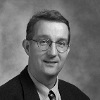 Robert Hoeben
Faculteit Geneeskunde
-
 Arn van den Maagdenberg
Faculteit Geneeskunde
-
 Mark Hazekamp
Faculteit Geneeskunde
-
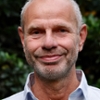 Jan Willem Erisman
Faculty of Science
-
 Marlies Reinders
Faculteit Geneeskunde
-
 Priya Ramcharan
Social & Behavioural Sciences
-
 Douwe Atsma
Faculteit Geneeskunde
-
Experience Day: what’s it like to be a student?
What is it like to be a Leiden University student at Campus The Hague? These prospective students found out on the Experience Day of 30 March.
-
These students know what it’s like to be old
What is it like to be old? Many young people cannot really imagine what it is like. For a group of Honours students, however, this question has been answered. They had the chance to wear an age simulation suit during the Bachelor Honours Class ‘Vitality and Ageing’.
-
‘War with Russia more likely now Trump has spurned Europe’
Europe’s security suddenly looks uncertain now President Trump has started negotiations with Putin. What does this mean for the Netherlands? What do we need to do?
-
‘It doesn’t feel like work’: what it’s like to be a mentor for Pre-University College
Guiding high school students as a mentor at Pre-University College: what is that like? And what does it all entail? As part of the 20th anniversary of PRE-College Leiden, we asked two experienced PRE-mentors about their job - and what makes their work so meaningful. ‘You really see them grow.’
-
Professional female footballers have to play like a man
Women’s football is steadily gaining attention. It’s as though the sport is becoming emancipated. And yet in conversations with professional female footballers philosopher Nathanja van den Heuvel discovered that a male culture still prevails. Female footballers often feel like second-class athletes,…
-
Millions of people like and share junk news on Facebook
Junk news sites with unknown names such as Trendnieuws and Viraal Vandaag reach millions of Dutch people thanks to their Facebook pages. Messages from those pages are much more often shared and liked than messages from pages from well-known news media such as De Telegraaf, NOS and NU.nl. This is shown…
-
On the efficacy of digitized storybooks for young learners with attention problems
-
-
Read about Middle Ages on new Leiden research blog
The Middle Ages are becoming increasingly more popular: just look at the popularity of such ‘medievalist’ TV series as Game of Thrones and Vikings, and let’s not forget popular re-enactments of medieval battles. Leiden University is home to many specialists of this fascinating period and this new blog…
-
Read the three most downloaded papers by CADS researchers
Three of our researchers have been awarded a certificate for receiving enough downloads to be in the top 10% of papers in 2022
-
‘If I had put my story in a paper, nobody would have read it'
During a closing exhibition, participants of the Master Honours Class 'Leiden: City of Refugees?' present their invitation to an imaginary group of 'others'. By combining science with art, students learn to look at society in a different manner.